What to include in a dog first aid kit
A practical checklist for putting together a first aid kit for dog walks, days out and trips away.
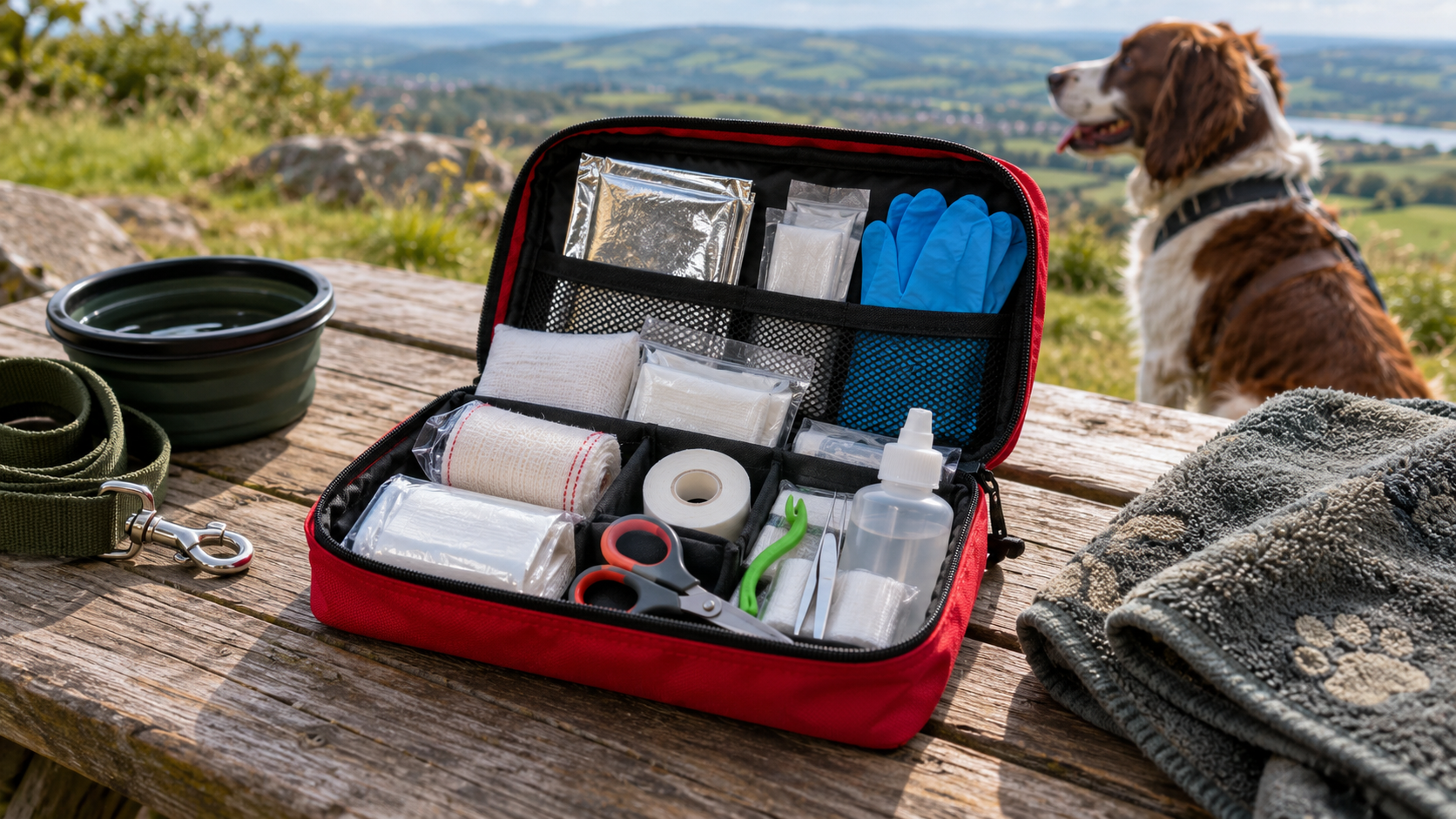
A dog first aid kit is one of those things you hope you never need, but it can be incredibly useful when you’re out walking.
Minor cuts, torn paw pads, ticks and other unexpected problems can happen even on familiar routes, and having a few basic supplies with you means you can deal with small issues or provide immediate care while you arrange veterinary help.
You don’t need to carry a miniature veterinary surgery in your backpack. A useful walking first aid kit can be fairly compact, and many of the items inside it are inexpensive.
The important thing is knowing its limits. First aid can help protect an injury or keep your dog comfortable, but it isn’t a replacement for veterinary treatment. If your dog is seriously injured, becomes suddenly unwell or you’re unsure what to do, contact a vet as soon as possible.
What to put in your dog first aid kit
For most walks and days out, a simple kit containing the following gives you a useful starting point.
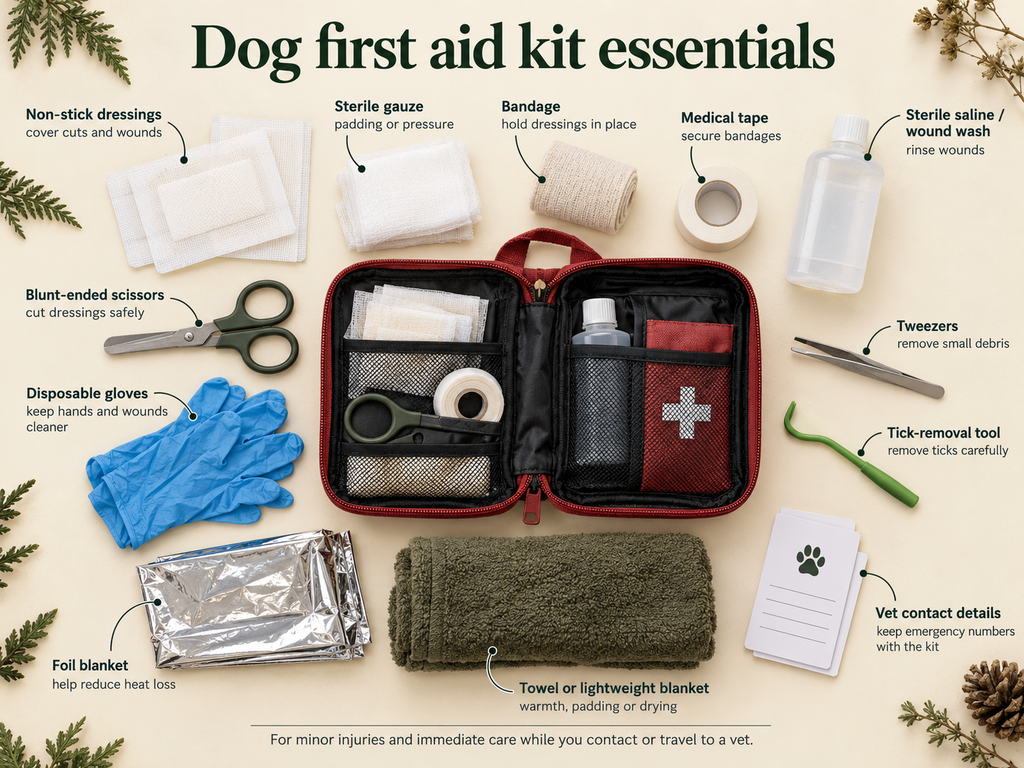
Useful extras for longer walks
A few other items aren’t strictly first aid equipment but can make dealing with an unexpected problem much easier.
For longer or more remote walks, consider carrying:
- spare drinking water
- a collapsible bowl
- an extra lead or lightweight slip lead
- a small torch or headtorch
- poo bags, which can also be useful for keeping dirty equipment separate
- an emergency contact card
- an offline map or GPX route
- a power bank for your phone
If your dog takes regular medication, make sure you also have enough with you for the length of your trip.
For walks in hot weather, carrying enough water becomes particularly important. A first aid kit isn’t much use if the main problem could have been prevented with better preparation.
What shouldn’t you put in the kit?
One of the most important things to leave out is human medication.
Common medicines that are safe for people can be dangerous or even toxic to dogs. Don’t give painkillers, antihistamines or other medication unless a vet has specifically advised you to give that particular product and dose to your dog.
It’s also best to avoid filling your kit with creams, antiseptics and wound products simply because they’re already in the bathroom cabinet.
If you want to carry a particular veterinary wound cleaner or treatment, ask your vet whether it’s appropriate for your dog and how it should be used.
Keeping the kit simple makes it much less likely that you’ll reach for the wrong product in a stressful situation.
Know when first aid isn’t enough
A first aid kit is most useful for minor injuries and immediate care while you seek help.
Some situations need veterinary attention straight away.
Contact a vet urgently if your dog has:
- heavy or persistent bleeding
- a deep wound
- difficulty breathing
- collapsed or become unusually weak
- been hit by a vehicle
- suffered a serious fall
- swallowed or been exposed to something potentially poisonous
- a suspected broken bone
- a serious eye injury
- signs of heatstroke
- a wound containing a deeply embedded object
- severe pain or sudden difficulty walking
If you’re unsure how serious something is, call your vet. They can usually tell you whether your dog needs to be seen immediately and what you should do in the meantime.
Be careful when handling an injured dog too. Pain and fear can cause even a normally gentle dog to react unexpectedly.
Keep your kit ready to use
Putting a first aid kit together is only useful if everything inside is still usable when you need it.
Every few months, have a quick check through the contents.
Look for:
- damaged or opened sterile packaging
- expired products
- empty wound wash bottles
- used dressings or bandages that haven’t been replaced
- rusty or damaged scissors and tweezers
- missing tick tools
- outdated veterinary contact information
If the kit lives permanently inside a walking backpack, make sure it stays dry. A small waterproof pouch or zipped bag works well and makes it easy to transfer between different backpacks.
It’s also worth keeping a larger kit in the car and a smaller version in your walking bag. The walking kit only needs the essentials, while the car kit can hold extra dressings, a larger towel and additional supplies.
The BandiBoo takeaway
A good dog first aid kit doesn’t need to be complicated.
A few dressings, bandages, wound-cleaning supplies and basic tools can make a big difference when something goes wrong away from home.
More important than carrying lots of equipment is knowing when you can deal with something yourself and when your dog needs veterinary help.
Keep the kit simple, check it occasionally and take it with you on longer walks and trips. Hopefully you’ll rarely need to open it — but if you do, you’ll be glad it’s there.
Put the advice into context
Related walks
Routes selected because this Guide is particularly relevant to planning or enjoying them.



Keep reading
More useful guides

Walking your dog safely around wildlife
How to enjoy countryside walks with your dog while giving wildlife the space it needs, including advice around nesting birds, deer, waterways…
Read guide
Walking Safely Around Livestock With Your Dog
Walking through farmland is part of what makes many countryside routes so enjoyable, but sharing fields and trails with livestock means taking…
Read guide
Preparing for a mountain hike with your dog: what to know before you go
Mountain walks ask more of dogs than ordinary countryside routes. Here’s how to assess fitness, terrain, weather, livestock, water and route difficulty…
Read guide