Walking Safely Around Livestock With Your Dog
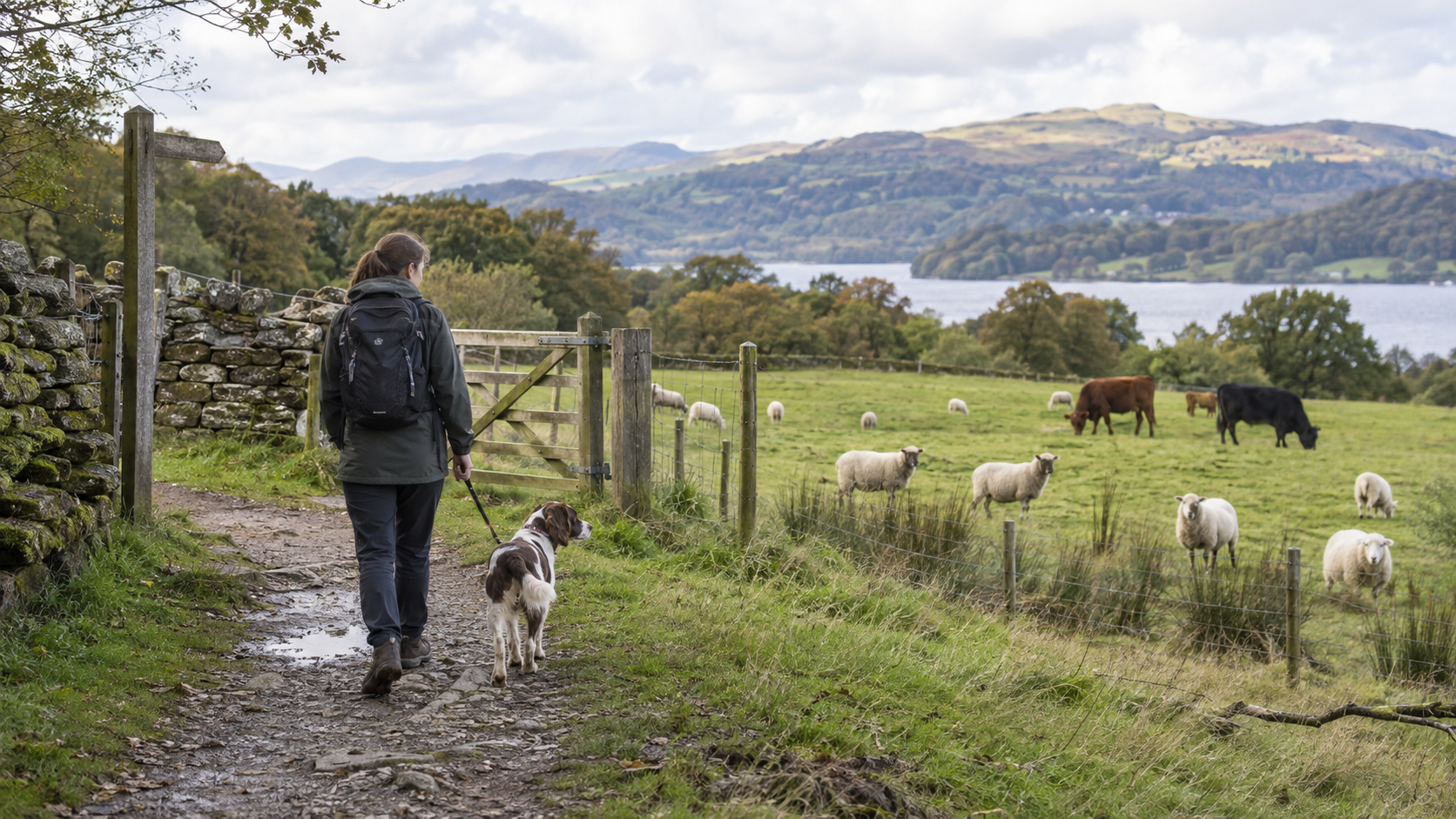
Walking through farmland is part of what makes many countryside routes so enjoyable, but sharing fields and trails with livestock means taking a little extra care — particularly when you have a dog with you.
Most encounters with sheep, cattle and other farm animals pass without incident. The important thing is to give animals plenty of space, keep your dog under proper control and pay attention to what is happening around you.
Even a friendly dog can frighten livestock by running towards or chasing them, while cattle can become particularly protective when calves are present.
Here’s what to know before walking through a field with livestock.
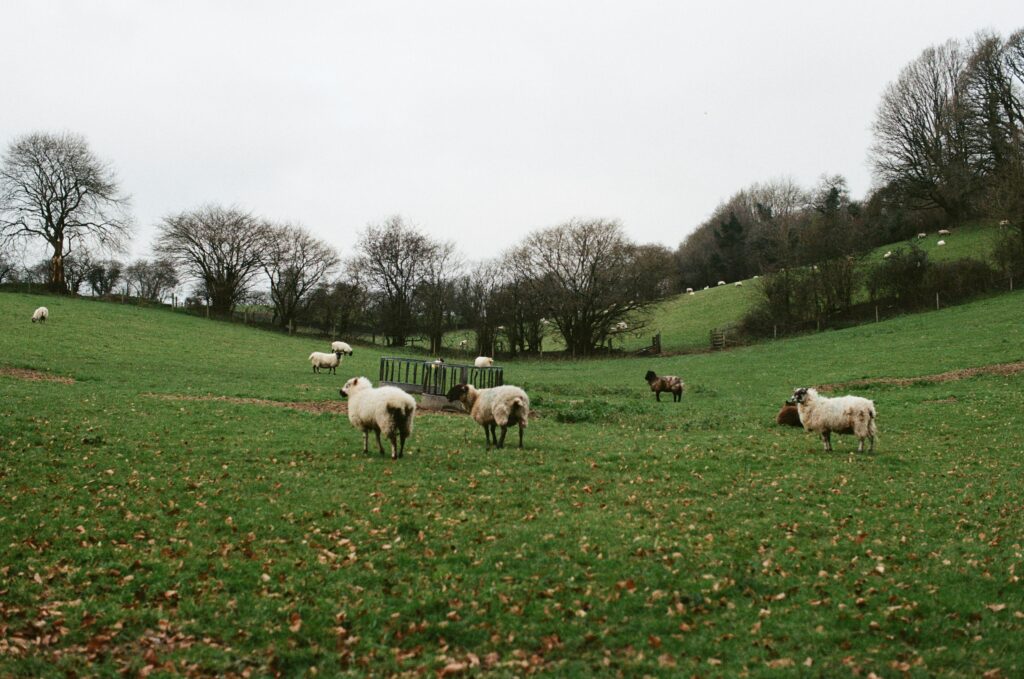
Before entering a field
Take a moment to look ahead before going through the gate.
Check what animals are in the field, where they are standing and whether there are young animals with them. If livestock are gathered immediately around the gate or appear unsettled, consider whether you can safely wait, give them a wider berth or use another permitted route.
It is also worth checking for signs at entrances. Farmers and land managers may introduce temporary instructions because of lambing, calving, livestock movements or other seasonal activity.
Where livestock are present:
- Put your dog on a short lead before entering.
- Keep your dog close rather than allowing it to approach the animals.
- Give livestock as much space as the route allows.
- Avoid walking directly through the middle of a herd or flock.
- Never deliberately approach or feed farm animals.
- Keep children close and calm around livestock.
If you are unsure whether it is sensible to enter a field, choosing another route is often the easiest option.
Keep dogs on a short lead around livestock
As a general rule, dogs should be kept on a short lead whenever you are walking close to livestock.
A retractable lead at full length gives considerably less control and can allow a dog to get too close before you have time to react. A normal walking lead or shortened long line is usually a better choice.
A dog does not need to physically attack an animal to cause harm. Chasing can frighten livestock and cause injuries, while the stress can be particularly serious for pregnant animals and young livestock.
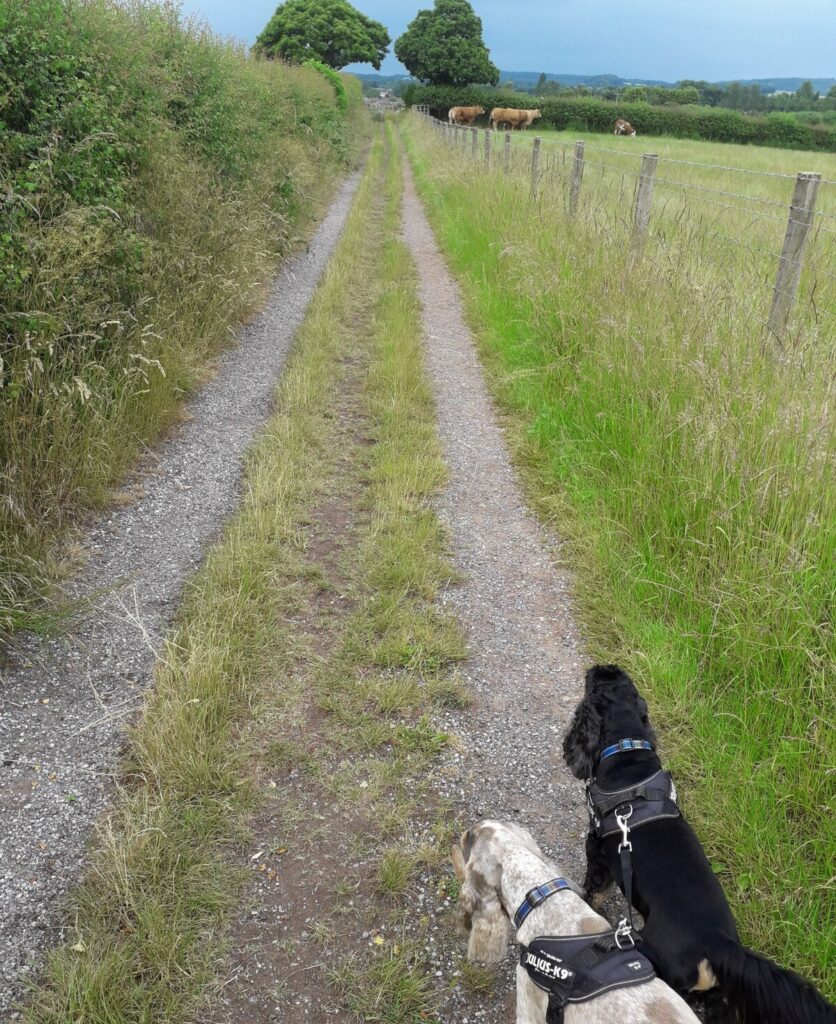
Reliable recall elsewhere therefore shouldn’t be treated as a reason to allow a dog to run freely through a livestock field.
If there is any doubt, use the lead.
Walking around sheep and lambs
Sheep can be especially vulnerable to dogs.
Keep your dog on a short lead and avoid allowing them to stare at, stalk, run towards or chase sheep, even if their behaviour appears playful.
Take extra care during lambing season. Give ewes and lambs plenty of room and never allow your dog to approach a lamb.
If sheep move away from you, don’t follow them unnecessarily. Continue calmly along the permitted route while maintaining as much distance as possible.
Remember that simply being chased can cause significant distress to sheep even when the dog never catches or touches them.
Walking around cattle
Cattle are often curious and may watch or move towards walkers, particularly when a dog is present.
Stay calm, keep a sensible distance and avoid sudden movements. Where possible, walk around the edge of a herd rather than attempting to pass through the middle.
Never deliberately walk between a cow and her calf. Cows with young can be particularly protective.
If cattle are blocking the route, don’t squeeze between animals simply to remain on the exact line of the footpath. Where it is safe and permitted to do so, give them a wide berth and rejoin the route once you have passed.
If the animals appear agitated before you enter the field, look for a sensible alternative rather than assuming they will move.
What should you do if cattle approach?
This is the situation every dog walker should know about before heading onto farmland.
If cattle begin moving towards you, stay calm and move steadily towards a safe exit. Avoid running or making sudden movements.
If you feel theatened by cattle while walking
let go of the dog’s lead and concentrate on getting yourself to safety.
This can feel counter-intuitive, but official countryside guidance recommends releasing the dog rather than trying to hold onto or protect it. A loose dog has a much better chance of moving away from the cattle, and the cattle’s attention may be focused on the dog rather than you.
Do not put yourself at greater risk by trying to pick your dog up or hold onto the lead if cattle are behaving aggressively.
Once you are safely away from the animals, regain control of your dog when it is safe to do so.
What about horses?
Horses may also be encountered on farmland, bridleways and shared countryside routes.
Keep your dog close and under control, giving horses plenty of room. Don’t allow your dog to run towards, bark at or chase them.
If a horse and rider are approaching, bring your dog close or put them on a lead before they reach you. Allow plenty of space for them to pass and follow any instructions from the rider.
Remember that even a calm horse can be startled by an unfamiliar dog appearing suddenly from vegetation or running up behind it.
Young animals need extra space
Whether you encounter calves, lambs, foals or other young livestock, give them additional room.
Adult animals can behave differently when protecting their young, so don’t put yourself between a mother and her offspring and don’t allow your dog to investigate young animals.
If your planned route takes you through a field containing animals with young and there is a reasonable alternative available, using it may be the more comfortable choice for everyone.
Follow signs and leave gates as you find them
Temporary livestock signs are there for a reason.
A route that was completely clear on your previous visit may contain cattle or sheep the next time you walk it, so always follow the instructions you find on the day rather than relying solely on an old route description.
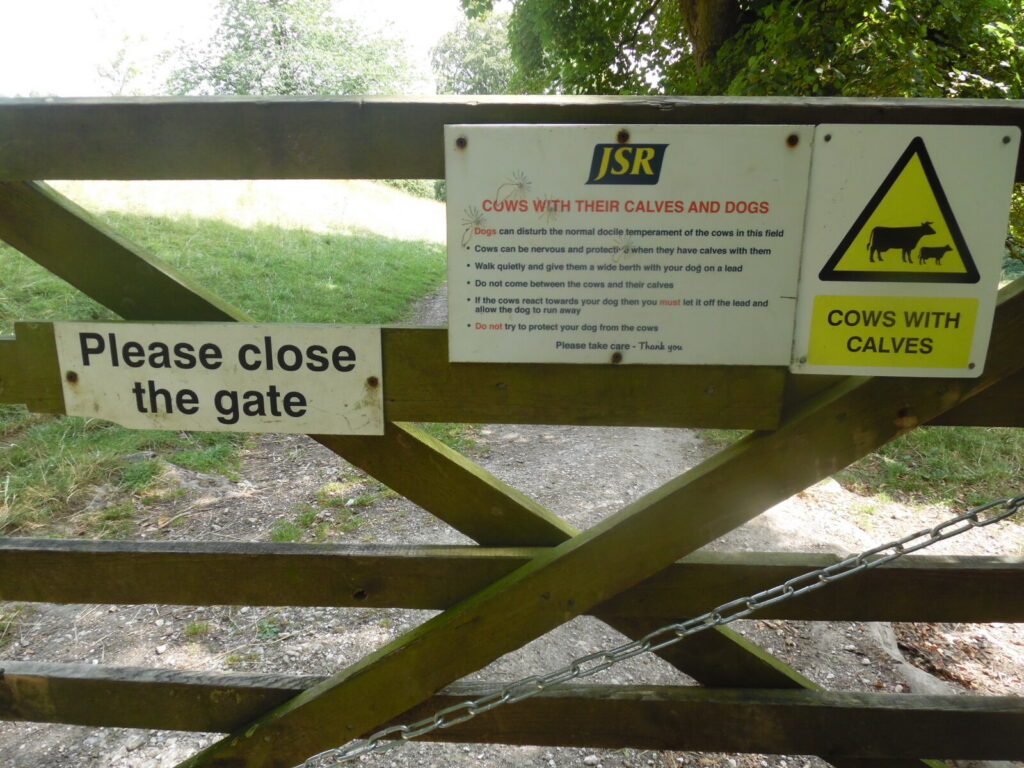
Leave gates exactly as you find them. A closed gate may be keeping livestock where they need to be, while a gate deliberately left open may provide access to food or water.
Use gates, stiles and designated crossing points rather than climbing fences or field boundaries.
Pick up after your dog
Dog waste doesn’t simply make paths unpleasant for other walkers. It can also spread disease and parasites that affect livestock.
Always carry poo bags, pick up after your dog and use an appropriate bin. If there isn’t one available, carry the bag with you until you can dispose of it properly.
Don’t leave filled bags beside paths, gates or fences with the intention of collecting them later.
Be prepared for livestock to change
One of the most important things to remember is that livestock are temporary.
A field that was empty last week may contain cattle today. Sheep may be moved between fields, calves and lambs appear seasonally and temporary grazing is increasingly used on nature reserves and other managed landscapes.
For this reason, BandiBoo walk information should always be treated alongside conditions on the ground.
If we flag livestock on a route, it means you should be prepared to encounter them — not that they will necessarily be present every time you visit.
Know the local rules
Access rules differ across the UK and individual landowners may introduce additional restrictions.
In England and Wales, there are specific rules governing dogs on Open Access land, including lead requirements around livestock and seasonal restrictions.
Worth knowing
New livestock worrying law in England and Wales
The Dogs (Protection of Livestock) (Amendment) Act 2025 came into force on 18 March 2026. It introduced tougher penalties for livestock worrying, including unlimited fines, and gave police stronger powers to investigate incidents and seize dogs where necessary.
Applies to England and Wales; different legislation applies in Scotland.
Scotland operates under the Scottish Outdoor Access Code, where access rights depend on responsible behaviour and dogs being kept under proper control.
Wherever you’re walking, local signs and current land-management instructions should always take priority.
Quick check
Before you go
Before crossing a field with your dog:
- Stop and look for livestock before entering.
- Check for calves, lambs or other young animals.
- Put your dog on a short lead.
- Give livestock as much space as possible.
- Avoid walking through the middle of a herd.
- Never allow your dog to chase or approach livestock.
- Follow temporary signs and instructions.
- Leave gates as you find them.
- Pick up all dog waste.
- If cattle threaten you, release your dog’s lead and move to safety.
Livestock shouldn’t put you off enjoying countryside walks with your dog. Farm animals are a normal part of many of Britain’s best walking landscapes, and in most cases sharing the countryside with them is straightforward.
The BandiBoo view
The key is recognising that every field can be different.
Keep your dog close, give animals plenty of room, take particular care around young livestock and be prepared to change your plan if something doesn’t feel right.
A few simple precautions help protect you and your dog while also protecting the animals, farmers and landscapes that make these walks possible.
Put the advice into context
Related walks
Routes selected because this Guide is particularly relevant to planning or enjoying them.
Keep reading
More useful guides
Walking your dog safely around wildlife
How to enjoy countryside walks with your dog while giving wildlife the space it needs, including advice around nesting birds, deer, waterways…
Read guide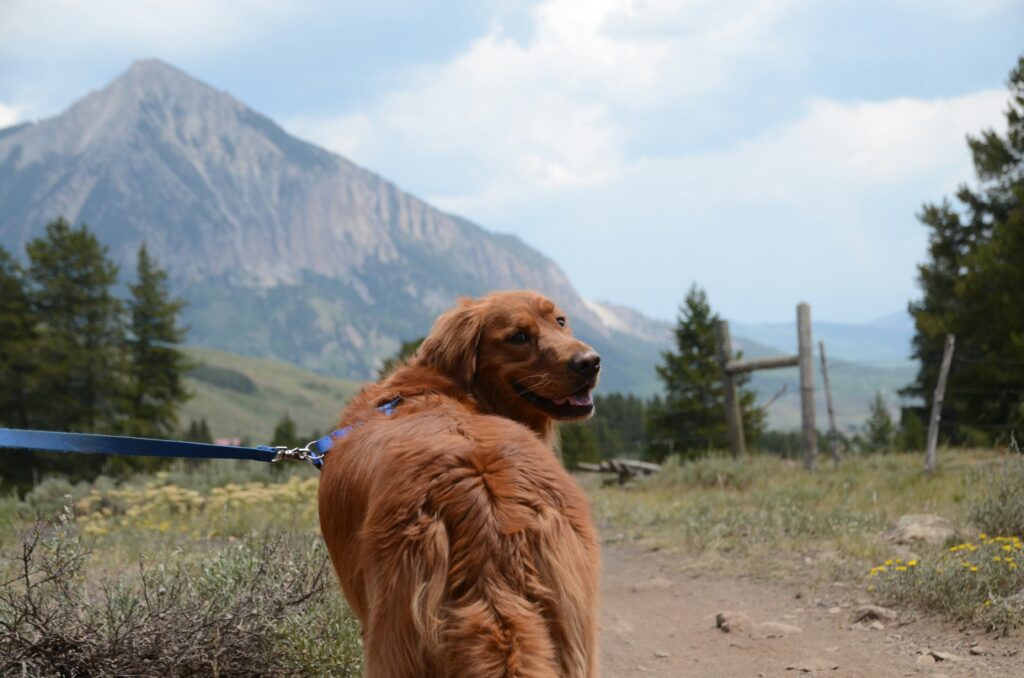
Preparing for a mountain hike with your dog: what to know before you go
Mountain walks ask more of dogs than ordinary countryside routes. Here’s how to assess fitness, terrain, weather, livestock, water and route difficulty…
Read guide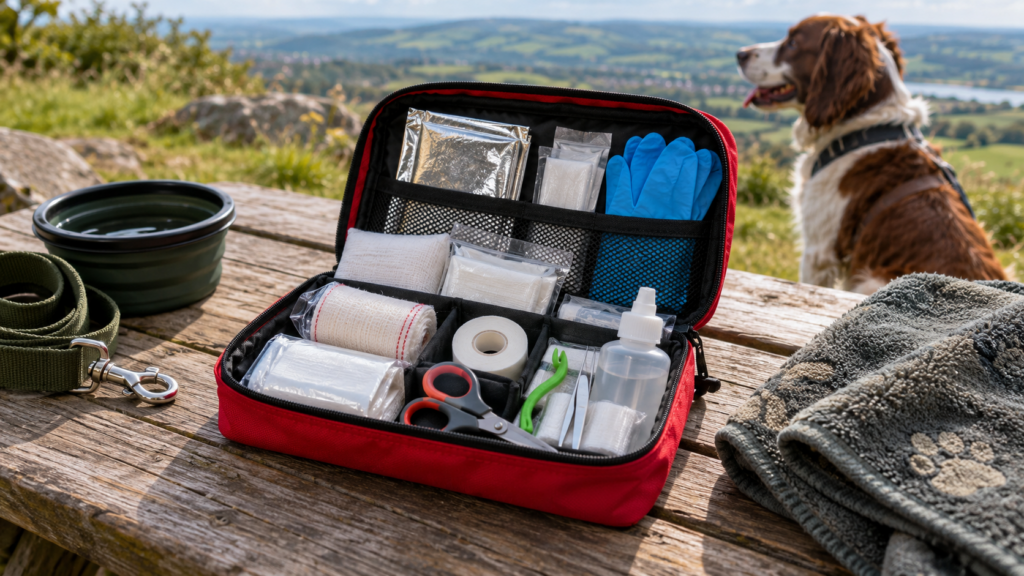
What to include in a dog first aid kit
A practical checklist for putting together a first aid kit for dog walks, days out and trips away.
Read guide